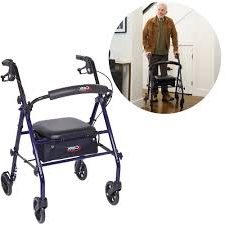
Rollator walker (four-wheeled walker) safety is crucial for preventing accidents and ensuring a user’s well-being. Some safety tips include maintaining proper posture while walking, using the rollator’s brakes when needed, avoiding uneven or slippery surfaces, and regularly checking the rollator’s condition for any signs of wear or damage. It’s also important to follow the manufacturer’s instructions and consult a healthcare professional for guidance on proper usage.
Using a rollator walker safely involves a few key steps:
- Proper Fit: Ensure that the rollator is adjusted to your height. Your elbows should be slightly bent when holding the handles, and you should be able to walk comfortably without leaning forward or backward.
- Brakes: Familiarize yourself with the brakes and how to engage them. Always lock the brakes when sitting down or standing still.
- Stable Movement: Move at a steady pace and avoid sudden movements. Keep the rollator centered between your legs and use it for support while walking.
- Observe Your Surroundings: Pay attention to your environment and potential obstacles. Avoid uneven or slippery surfaces, and use caution on ramps, curbs, and steps.
- Sit Down Safely: When using the rollator to sit down, ensure that it’s stable and the brakes are locked. Use a chair with armrests for added support when getting up or sitting down.
- Walking and Turning: Maintain an upright posture and look forward while walking. To turn, use the rollator to pivot gradually rather than making sharp turns.
- Weight-Bearing: Place your weight evenly on both handles and avoid leaning heavily on one side.
- Avoid Overloading: Don’t carry heavy items or overload the rollator’s storage compartment, as this can affect stability.
- Use on Inclines: When going up or down slopes, always face the rollator forward and take small steps. Use the brakes and lean into the rollator for added support.
- Assistance: If you encounter challenging terrain or situations, consider asking for assistance from a caregiver or someone nearby.
- Regular Maintenance: Keep the rollator in good condition by checking for loose parts, properly inflated tires, and functioning brakes.
- Practice: Spend time practicing and getting comfortable with your rollator in a safe environment before using it in more complex settings.
*If you have any concerns about using a rollator safely or if you experience any difficulties, please contact a Home Safety Consultant Specialist today. homesafetyconsultant.com